Mostrando entradas con la etiqueta Gastronomy. Mostrar todas las entradas

sábado, 29 de diciembre de 2012

Gastronomy

Greek Oysters:
Oysters have been a favorite of Greek gourmets, since Aristotle first documented their habits and virtues in his "Zoological". These tasty bivalves have captivated the appetites of gourmands from time immemorial, too, such as that of the Roman emperor Vitelius, who is said to have consumed one thousand oysters in one sitting. Seneca supposedly ate a thousand a week. Writers, from Shakespeare (who coined the famous phrase "the world is my oyster") to Balzac to Lord Byron, have waxed poetic about this tasty treat, too.
Greek Oysters
Still, much is owed to the acumen of ancient Greek aqua farmers, regarding the cultivation of the oyster. Although other ancient peoples, namely the North American coastal Indians, were eating wild oysters long before Aristotle documented their habits, it was the ancient Greeks who probably first cultivated them. According to various sources, the earliest cultivations date back to the 4th century B.C., to the island of Rhodes. Local fishermen apparently first noticed that tiny oysters, attached themselves to shards of broken pottery in the sea and there found a place to grow and reproduce. It didn't take long, before the fishermen started placing pottery in the sea, specifically to help the mussels flourish. Other tales point to Lesvos, where local fishermen noticed that large quantities of oysters seemed to grow but not reproduce around specific water current.
The two basic tenets of oyster farmers were hence discovered that the bivalve can grow easily in some places but can only reproduce under certain conditions. To this day, oyster farming is based on that same principle. There are numerous varieties of oysters all over the world. In the Mediterranean, the most commonly encountered belongs to the genus Ostrea, with local species from Gibraltar to Israel; Greek oysters tend to be small and quite tasty. The best are said to be found in the many coves of Halkidiki and in the Thermaikos Gulf. A common folk belief is that oysters should not be consumed during the months whose names do not contain the letter "R" -in other words, during the summer
Preparation:

Saute the pork in 1 tablespoons of olive oil, until it browns lightly. Add the pepper and saute for a minute to soften. Add the vinegar, remaining olive oil, salt, pepper and oysters, together with their juices. As soon as the oysters warm through, remove. Place the spinach on a serving platter or in a large salad bowl and top with the oyster-pork mixture. Serve immediately.

sábado, 22 de diciembre de 2012

Gastronomy

Greek Meze
Meze:
Meze or mezze ( /ˈmɛzeɪ/) is a selection of small dishes served in the Mediterranean, Middle East and Balkans as breakfast, lunch or even dinner, with or without drinks. In Levantine cuisines and in the Caucasus region, meze is served at the beginning of all large-scale meals.
The word is found in all the cuisines of the former Ottoman Empire and comes from the Turkish meze "taste, flavour, snack, relish", borrowed from Persian مزه (maze "taste, snack" < mazīdan "to taste").The English word was probably borrowed from the Greek version mezés (μεζές).

Turkish meze often consist of beyaz peynir (literally "white cheese"), kavun (sliced ripe melon), acılı ezme (hot pepper paste often with walnuts), haydari (thick strained yoghurt like the Levantine labne), patlıcan salatası (cold aubergine salad), beyin salatası (brain salad), kalamar (calamari or squid), enginar (artichokes), cacık (yoghurt with cucumber and garlic), pilaki (foods cooked in a special sauce), dolma or sarma (rice-stuffed vine leaves or other stuffed vegetables, such as bell peppers), and köfte (meatballs).
In Greece, Cyprus and Balkans, mezé, mezés, or mezédhes (plural) are small dishes, hot or cold, spicy or savory. Seafood dishes such as grilled octopus may be included, along with salads, sliced hard-boiled eggs, garlic-bread, kalamata olives, fava beans, fried vegetables, melitzanosalata (eggplant salad), taramosalata, fried or grilled cheeses called saganaki, and fresh Greek sheep, goat or cow cheeses (feta, kasseri, kefalotyri, graviera, anthotyros, manouri, metsovone and mizithra). Other offerings are fried sausages, usually pork and often flavored with orange peel, bekrí-mezé (the "drunkard's mezé", a diced pork stew), and meatballs like keftédes and soutzoukákia smyrnéika.
https://www.youtube.com/watch?v=2rv0_hyrvgE

domingo, 9 de diciembre de 2012

Gastronomy

Spanakopita
Spanakopita:

Spanakopita (spinach, and πίττα, pítta, pie) or spinach pie is a Greek savory pastry.
It is in the burek family of pastries with a filling of chopped spinach, feta cheese (sometimes in combination with ricotta cheese, as it is less expensive, and adds creaminess), onions or scallions, egg, and seasoning. The filling is wrapped or layered in phyllo (filo) pastry with butter and/or olive oil, either in a large pan from which individual servings are cut, or rolled into individual triangular servings . While the filo-dough recipe is most common, many recipes from the Greek islands call for a crust made of flour and water to form a crunchier, calzone-like exterior in place of the flaky filo dough. The pastry is golden in color when baked, the color often enhanced by butter and egg yolk. Other white, fresh, preferably salted cheeses may also mixed with, or substituted for, the feta cheese.
It is mostly eaten as a snack in Greece, and it can be an alternative to tyropita. There is a "fasting", or vegan, version of spanakopita, eaten during the Great Lent and other religious fasts, and composed of spinach, onions or green onions, other green herbs like dill, parsley or celery, olive oil and a little wheat flour, but without eggs or dairy products; the mixture is oven-baked until crisp. Non-traditional vegan versions are available that typically use tofu instead of cheese.
In rural Greece, smaller amounts of spinach are used, with the missing part substituted with leeks, chard, and sorrel.
The pastry is similar to torta pasqualina, a traditional dish from Italy's Liguria region, that is very common in Argentina and Uruguay.
It can also be made with puff pastry.
Here a link to see how it's done:https://www.youtube.com/watch?v=fjAz4Bys5MQ

miércoles, 5 de diciembre de 2012

Gastronomy

Qurabiya
Qurabiya:
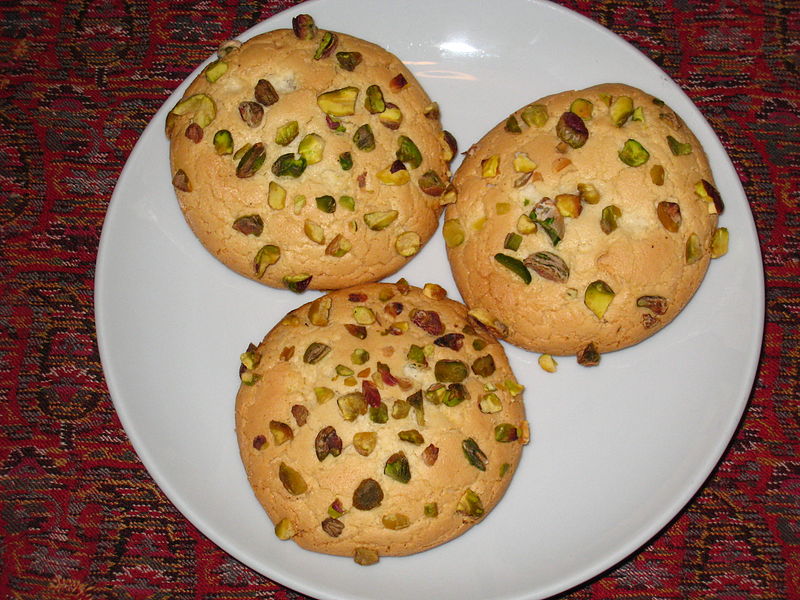
Qurabiya is a shortbread-type biscuit usually made with ground almonds.

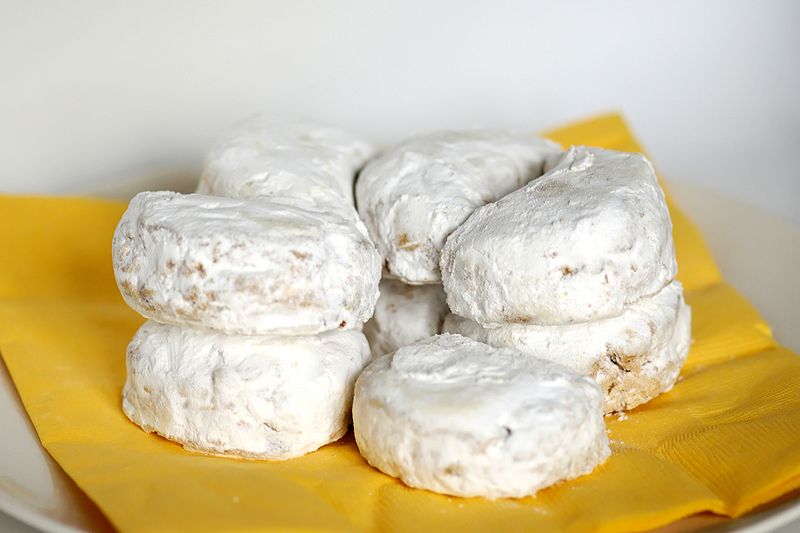
Kourabiedes or Kourabiethes (Greek: κουραμπιέδες) resemble a light shortbread, typically made with almonds. Kourabiedes are sometimes made with brandy, usually Metaxa, for flavouring, though vanilla, mastika or rose water are also popular.
In some regions of Greece, Christmas kourabiedes are adorned with a single whole spice clove embedded in each biscuit.
Kourabiedes are shaped either into crescents or balls, then baked till slightly golden. After they cool, they are usually rolled in icing sugar.
Greek qurabiya
Kourabiedes are especially popular for special occasions, such as Christmas or baptisms (christenings).
There are other types of qurabiyas, as the spanish,mexinas, philipine or the american.
The recipe of since the qurabiya does:
https://www.youtube.com/watch?v=yQUKghqrJT0

lunes, 19 de noviembre de 2012

Gatronomy

Moussaka
Moussaka:
Moussaka is an aubergine (eggplant) or potato based dish popular in Balkan cuisine and Mediterranean cuisine, with several variations. The best known variation is the one in Greek cuisine.
Names and etymology:
The English name came from modern Greek mousakas (μουσακάς). The Greek name came from the Turkish musakka designating roughly the same recipe. The same name and recipe is found throughout the lands that formerly were part of the Ottoman Turkish Empire. The Turkish name came from Arabic musaqaʿa (مسقعة) which in Arabic means moussaka but comes from an Arabic root literally meaning "chilled". In Arabic countries a variant of the same recipe is eaten cold. A popular Middle Eastern recipe called İmam bayıldı (it has that name in Turkish, Arabic and Greek) is eaten cold and is similar to moussaka. Moussaka is eaten warm.
Preparation:

Most versions are based primarily on sautéed eggplant (aubergine) and tomato, usually with minced meat. The Greek version includes layers of meat and aubergine topped with a white sauce/Béchamel sauce and baked. Turkish musakka, on the other hand, is not layered. Instead, it is prepared with sautéed aubergines, green peppers, tomatoes, onions, and minced meat. It is eaten with cacık and pilaf. There are also variants with zucchini, carrots and potatoes. The Serbian version and Bulgarian version use potatoes instead of aubergines, pork mince and the top layer is yogurt mixed with raw eggs and a couple of spoons of flour. In the Arab world, moussaka is a cooked salad made up primarily of tomatoes and aubergine, similar to Italian caponata, and is usually served cold as a mezze dish.
Moussaka
The modern Greek version was probably invented by Tselementes in the 1920s. It has three layers: a bottom layer of sautéed aubergine slices; a middle layer of cooked ground lamb cooked with onion, garlic, chopped tomatoes, herbs, and spices (cinnamon, allspice and black pepper); and a top layer of béchamel sauce or egg custard. The composed dish is baked until the top layer is browned. Moussaka is usually served lukewarm.
There are variations on this basic recipe, sometimes with no sauce, sometimes with other vegetables. The most common variant in Greece may include courgette (zucchini), part-fried potatoes or sautéed mushrooms in addition to the aubergine. There is even a fast-day version in the Greek cookbook by Tselementes which includes neither meat nor béchamel sauce, just vegetables (ground aubergine is used instead of ground meat), tomato sauce, and bread crumbs. In some cases, moussaka is also decoratively layered on top of grape leaves (a common ingredient in Greek cuisine, also used for example in dolmades). A recipe for moussaka:
http://erecipe.com/recipes/show/id/2136

domingo, 11 de noviembre de 2012

Gastronomy

Greek salad
Greek salad:

Greek salad (Greek χωριάτικη σαλάτα [xorˈjatiki saˈlata] "rustic salad" or θερινή σαλάτα [θeriˈni saˈlata] "summer salad") is a summer salad in Greek cuisine.
Greek salad is a summer salad dish made with pieces of tomatoes, sliced cucumbers, green bell peppers, onion, sliced or cubed feta cheese, and olives (usually Kalamata olives, other types of olives may be used as well), typically seasoned with salt and dried oregano, and dressed with olive oil. Common additions include the pickled leaves, buds or berries of capers (especially in the Dodecanese islands), rocket (arugula) leaves, vinegar, lemon juice, and chopped parsley.
Other usage:
Greek salad

The term "Greek salad" is also used in North America, Australia, South Africa, and the United Kingdom to refer to a lettuce salad with Greek-inspired ingredients, dressed with oil and vinegar. Lettuce, tomatoes, feta, and olives are the most standard elements in an American-style "Greek salad", but cucumbers, peperoncini, bell peppers, onions, radishes, dolmades, anchovies/sardines and pickled hot peppers are common. In Detroit for example, a "Greek salad" also includes beets; and in Tampa Bay it often includes potato salad. Rather than simple olive oil and vinegar, as in a normal Greek lettuce salad, prepared dressings containing various herbs and seasonings are frequently employed. This style of "Greek salad" is rarely encountered in Greece except in the homes of American Greeks or restaurants that cater to tourists. In these countries, the true Greek salad, when encountered, may be called by the Greek term horiatiki or by such terms as "country salad", "peasant salad", or "village salad", to avoid confusion.
Greek salad of varying degrees of authenticity is also found in other European countries, e.g. Germany (where it is often called Bauernsalat), France (salade à la Grecque), Hungary (görög saláta), Spain (ensalada Griega) and Croatia, Serbia, Bosnia-Herzegovina, Macedonia, and Montenegro (grčka salata).
A link on how to make Greek salad :
http://www.youtube.com/watch?v=gPBEsV6qNM0