Mostrando entradas con la etiqueta Famous Greeks. Mostrar todas las entradas

jueves, 3 de enero de 2013

Greek battlers

Achilles
Achilles:

In Greek mythology, Achilles (Ancient Greek: Ἀχιλλεύς, Akhilleus) was a Greek hero of the Trojan War, the central character and the greatest warrior of Homer's Iliad.
Later legends (beginning with a poem by Statius in the 1st century AD) state that Achilles was invulnerable in all of his body except for his heel. As he died because of a small wound on his heel, the term Achilles' heel has come to mean one's point of weakness.

Achilles' name can be analyzed as a combination of ἄχος (akhos) "grief" and λαός (Laos) "a people, tribe, nation, etc." In other words, Achilles is an embodiment of the grief of the people, grief being a theme raised numerous times in the Iliad (frequently by Achilles). Achilles' role as the hero of grief forms an ironic juxtaposition with the conventional view of Achilles as the hero of kleos (glory, usually glory in war).
Laos has been construed by Gregory Nagy, following Leonard Palmer, to mean a corps of soldiers, a muster. With this derivation, the name would have a double meaning in the poem: When the hero is functioning rightly, his men bring grief to the enemy, but when wrongly, his men get the grief of war. The poem is in part about the misdirection of anger on the part of leadership.
The name Achilleus was a common and attested name among the Greeks soon after the 7th century BC. It was also turned into the female form Ἀχιλλεία (Achilleía) attested in Attica in the 4th century BC (IG II² 1617) and, in the form Achillia, on a stele in Halicarnassus as the name of a female gladiator fighting an "Amazon". Roman gladiatorial games often referenced classical mythology, and this seems to reference Achilles' fight with Penthesilea but gives it an extra twist of Achilles being "played" by a woman.


miércoles, 26 de diciembre de 2012

Greek kings

Queen Sofia of Spain
Queen Sofía of Spain:
Queen Sofía of Spain born 2 November 1938 is the current queen consort and wife of King Juan Carlos I of Spain.
Early life:

Princess Sophia of Greece and Denmark was born in Psychiko, Athens, Greece on 2 November 1938, the eldest child of the King Paul of Greece (1901–1964) and his wife, Queen Frederika (1917–1981), a former princess of Hanover. Queen Sofia is a member of the Schleswig-Holstein-Sonderburg-Glücksburg dynasty. Her brother is the deposed King Constantine II of Greece and her sister Princess Irene of Greece and Denmark. However, since the abolition of the Greek monarchy, the royal titles are recognized by the Dutch Monarchy and the Danish Royal Family.
Princess Sophia spent some of her childhood in Egypt where she took her early education in El Nasr Girls' College (EGC) in Alexandria, then went to South Africa during her family's exile from Greece during World War II. They returned to Greece in 1946. She finished her education at the prestigious Schloss Salem boarding school in Southern Germany, and then studied childcare, music and archeology in Athens. Sofia also studied at Fitzwilliam College, Cambridge a constituent college of the University of Cambridge. She represented Greece, alongside her brother then-Crown Prince Constantine, as a reserve member of the Gold Medal-winning sailing team in the 1960 Summer Olympics.
Marriage and family:

On 14 May 1962, Princess Sophia of Greece and Denmark married Infante Juan Carlos of Spain, whom she met on a cruise in the Greek Islands in 1954, in Athens at the Catholic Cathedral of Saint Dennis. She converted from Greek Orthodoxy to Roman Catholicism to become more palatable to Catholic Spain, and thus relinquished her rights to the Greek Throne. Along with this, the usual Latin spelling of her Greek name (Σοφία) was changed from Sophia to the Spanish variant Sofía.
In 1969, Prince Juan Carlos, who was never Prince of Asturias (the traditional title of the heir presumptive), was given the official title of "Prince of Spain" by the Spanish state; the title suggested by Sofía herself. Juan Carlos acceded to the throne as Juan Carlos I of Spain in 1975.
The couple have three children: HRH Infanta Elena, Duchess of Lugo (born 20 December 1963); HRH Infanta Cristina, Duchess of Palma de Mallorca (born 13 June 1965); and HRH Felipe, Prince of Asturias (born 30 January 1968). The King and Queen have eight grandchildren, four boys and four girls: Felipe and Victoria from the Infanta Elena; Juan, Pablo, Miguel and Irene from the Infanta Cristina; and Infanta Leonor, and Infanta Sofía, named in her honor, of Prince Felipe; all of whom are in the line of succession to the Spanish Throne.

domingo, 16 de diciembre de 2012

Greek conquerors

Statue Of Leonidas
Leonidas I:
Leonidas I"son of the lion"; died 480 BC), also known as Leonidas the Brave was a Greek hero-king of Sparta, the 17th of the Agiad line, third son of King Anaxandridas II of Sparta, who was believed to be a descendant of Herakles, possessing much of the latter's strength and bravery. Leonidas is notable for his leadership at the Battle of Thermopylae.
Life:
According to Herodotus, Leonidas' mother was his father's niece and had been barren for so long that the ephors, the five annually elected administrators of the Spartan constitution, tried to prevail upon King Anaxandridas to set aside his wife and take another. Anaxandridas refused, claiming his wife was blameless, whereupon the ephors agreed to allow him to take a second wife without setting aside his first. This second wife, a descendent of Chilon the Wise, promptly bore a son, Cleomenes. However, one year after Cleomenes' birth, Anaxandridas' first wife also gave birth to a son, Dorieus. Leonidas was the second son of Anaxandridas' first wife, and either the elder brother or twin of Cleombrotus.Because Leonidas was not heir to the throne, he was not exempt from attending the agoge, the public school that the sons of all Spartans had to complete in order to qualify for citizenship.Leonidas was thus one of the few Spartan kings to have ever undergone the notoriously harsh training of Spartan youth.
Battle of Thermopylae:
Battle of Thermopylae

In August 480 BC, Leonidas went out to meet Xerxes' army at Thermopylae with a small force of 300 men, where he was joined by forces from other Greek city-states, who put themselves under his command to form an army of 14,000 strong. There are various theories on why Leonidas was accompanied by such a small force of hoplites. According to Herodotus "The Spartans sent the men with Leonidas on ahead so that the rest of the allies would see them and march with no fear of defeat, instead of medizing like the others if they learned that the Spartans were delaying. At present the Carneia was in their way, but once they had completed the festival, they intended to leave a garrison at Sparta and march out in full force with all speed. The rest of the allies planned to do likewise, for the Olympiad coincided with these events. They accordingly sent their advance guard, not expecting the war at Thermopylae to be decided so quickly."Many modern commentators are unsatisfied with this explanation and point to the fact that the Olympic Games were in progress or impute internal dissent and intrigue.
Whatever the reason Sparta's own contribution was just 300 Spartiates (accompanied by their attendants and probably perioikoi auxiliaries), the total force assembled for the defense of the pass of Thermopylae came to something between four and seven thousand Greeks. They faced a Persian army who had invaded from the north of Greece under Xerxes I. Herodotus stated that this army consisted of over two million men; modern scholars consider this to be an exaggeration and give estimates ranging from 50,000 to 200,000

domingo, 9 de diciembre de 2012

Greek philosophers

Socrates
Socrates:

Socrates (c. 469 BC – 399 BC) was a classical Greek Athenian philosopher. Credited as one of the founders of Western philosophy, he is an enigmatic figure known chiefly through the accounts of later classical writers, especially the writings of his students Plato and Xenophon, and the plays of his contemporary Aristophanes. Many would claim that Plato's dialogues are the most comprehensive accounts of Socrates to survive from antiquity.
Through his portrayal in Plato's dialogues, Socrates has become renowned for his contribution to the field of ethics, and it is this Platonic Socrates who also lends his name to the concepts of Socratic irony and the Socratic method, or elenchus. The latter remains a commonly used tool in a wide range of discussions, and is a type of pedagogy in which a series of questions are asked not only to draw individual answers, but also to encourage fundamental insight into the issue at hand. It is Plato's Socrates that also made important and lasting contributions to the fields of epistemology and logic, and the influence of his ideas and approach remains strong in providing a foundation for much western philosophy that followed.

The Socratic problem:

An accurate picture of the historical Socrates and his philosophical viewpoints is problematic: an issue known as the Socratic problem.
As Socrates did not write philosophical texts, the knowledge of the man, his life, and his philosophy is entirely based on writings by his students and contemporaries. Foremost among them is Plato; however, works by Xenophon, Aristotle, and Aristophanes also provide important insights. The difficulty of finding the “real” Socrates arises because these works are often philosophical or dramatic texts rather than straightforward histories. Aside from Thucydides (who makes no mention of Socrates or philosophers in general) and Xenophon, there are in fact no straightforward histories contemporary with Socrates that dealt with his own time and place. A corollary of this is that sources that do mention Socrates do not necessarily claim to be historically accurate, and are often partisan (those who prosecuted and convicted Socrates have left no testament). Historians therefore face the challenge of reconciling the various texts that come from these men to create an accurate and consistent account of Socrates' life and work. The result of such an effort is not necessarily realistic, merely consistent.

lunes, 26 de noviembre de 2012

Greek philosophers

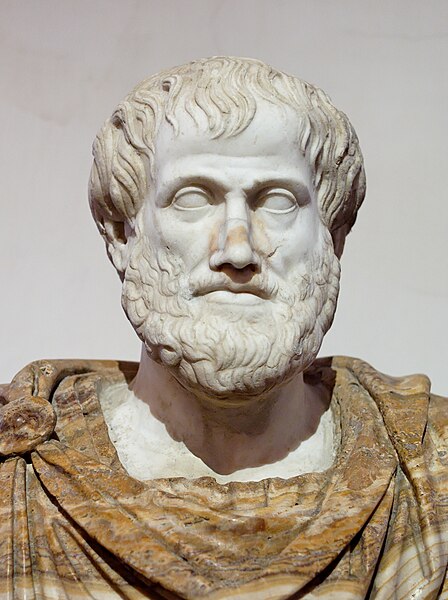
Aristotle:

Aristotle
Aristotle (Ancient Greek: Ἀριστοτέλης, Aristotélēs) (384 BC – 322 BC) was a Greek philosopher and polymath, a student of Plato and teacher of Alexander the Great. His writings cover many subjects, including physics, metaphysics, poetry, theater, music, logic, rhetoric, linguistics, politics, government, ethics, biology, and zoology. Together with Plato and Socrates (Plato's teacher), Aristotle is one of the most important founding figures in Western philosophy. Aristotle's writings were the first to create a comprehensive system of Western philosophy, encompassing morality, aesthetics, logic, science, politics, and metaphysics.
Aristotle's views on the physical sciences profoundly shaped medieval scholarship, and their influence extended well into the Renaissance, although they were ultimately replaced by Newtonian physics. In the zoological sciences, some of his observations were confirmed to be accurate only in the 19th century. His works contain the earliest known formal study of logic, which was incorporated in the late 19th century into modern formal logic. In metaphysics, Aristotelianism had a profound influence on philosophical and theological thinking in the Islamic and Jewish traditions in the Middle Ages, and it continues to influence Christian theology, especially the scholastic tradition of the Catholic Church. Aristotle was well known among medieval Muslim intellectuals and revered as المعلم الأول - "The First Teacher". His ethics, though always influential, gained renewed interest with the modern advent of virtue ethics. All aspects of Aristotle's philosophy continue to be the object of active academic study today. Though Aristotle wrote many elegant treatises and dialogues (Cicero described his literary style as "a river of gold"), it is thought that the majority of his writings are now lost and only about one-third of the original works have survived.

Aristotle, whose name means "the best purpose, was born in Stageira, Chalcidice, in 384 BC, about 55 km (34 mi) east of modern-day Thessaloniki.His father Nicomachus was the personal physician to King Amyntas of Macedon. Aristotle was trained and educated as a member of the aristocracy. At about the age of eighteen, he went to Athens to continue his education at Plato's Academy. Aristotle remained at the academy for nearly twenty years before quitting Athens in 348/47 BC. Aristotle was invited by Philip II of Macedon to become the tutor to his son Alexander in 343 BC

sábado, 17 de noviembre de 2012

Greek conquerors

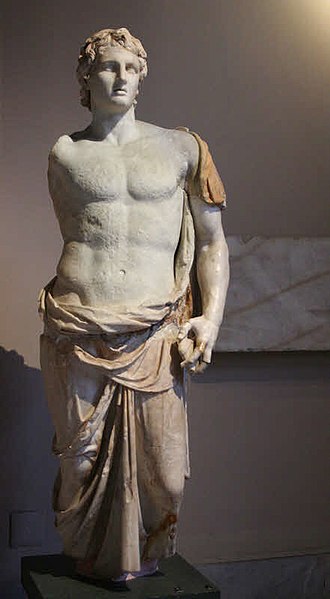
Alexander the Great:
Mosaic of Alexander the Great
Alexander III of Macedon (20/21 July 356 – 10/11 June 323 BC), commonly known as Alexander the Great was a king of Macedon, a state in northern ancient Greece. Born in Pella in 356 BC, Alexander was tutored by Aristotle until the age of 16. By the age of thirty, he had created one of the largest empires of the ancient world, stretching from the Ionian Sea to the Himalayas. He was undefeated in battle and is considered one of history's most successful commanders.
Sculpture of Alexander the Great
Alexander succeeded his father, Philip II of Macedon, to the throne in 336 BC after Philip was assassinated. Upon Philip's death, Alexander inherited a strong kingdom and an experienced army. He was awarded the generalship of Greece and used this authority to launch his father's military expansion plans. In 334 BC, he invaded Persian-ruled Asia Minor and began a series of campaigns that lasted ten years. Alexander broke the power of Persia in a series of decisive battles, most notably the battles of Issus and Gaugamela. He subsequently overthrew the Persian King Darius III and conquered the entirety of the Persian Empire. At that point, his empire stretched from the Adriatic Sea to the Indus River.
Early life:
Alexander was born on the 6th day of the ancient Greek month of Hekatombaion, which probably corresponds to 20 July 356 BC, although the exact date is not known in Pella, the capital of the Ancient Greek Kingdom of Macedon. He was the son of the king of Macedon, Philip II, and his fourth wife, Olympias, the daughter of Neoptolemus I, king of Epirus. Although Philip had seven or eight wives, Olympias was his principal wife for some time, likely a result of giving birth to Alexander.
 Alexander was proclaimed king by the nobles and army at the age of 20.
Map of Macedonia
Egypt:
Alexander advanced on Egypt in later 332 BC, where he was regarded as a liberator.  During his stay in Egypt, he founded Alexandria-by-Egypt, which would become the prosperous capital of the Ptolemaic Kingdom after his death.
Alexander's death was so sudden that when reports of his death reached Greece, they were not immediately believed. Alexander had no obvious or legitimate heir, his son Alexander IV by Roxane being born after Alexander's death. 

viernes, 9 de noviembre de 2012

Greek philosophers

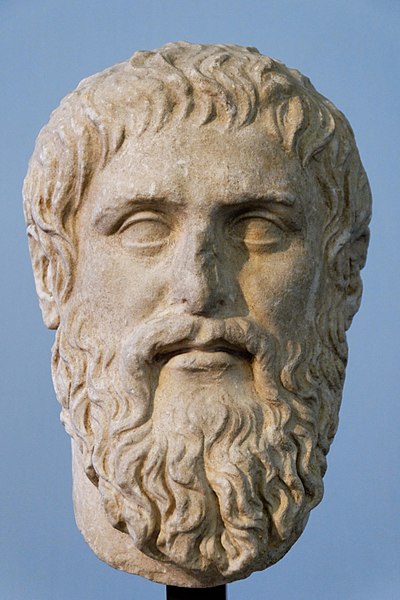
Plato:
Plato was a Classical Greek philosopher, mathematician, student of Socrates, writer of philosophical dialogues, and founder of the Academy in Athens, the first institution of higher learning in the Western world. Along with his mentor, Socrates, and his student, Aristotle, Plato helped to lay the foundations of Western philosophy and science .In the words of A. N. Whitehead:
"The safest general characterization of the European philosophical tradition is that it consists of a series of footnotes to Plato. I do not mean the systematic scheme of thought which scholars have doubtfully extracted from his writings. I allude to the wealth of general ideas scattered through them".
 Plato's dialogues have been used to teach a range of subjects, including philosophy, logic, ethics, rhetoric, and mathematics. Plato is one of the most important founding figures in Western philosophy.
He was born in Athena's between 429 and 423 BC. A variety of sources have given accounts of Plato's death. One story, based on a mutilated manuscript, suggests Plato died in his bed, whilst a young Thracian girl played the flute to him. Another tradition suggests Plato died at a wedding feast,  he died in 348-347 BC.
Philosophy:
Plato often discusses the father-son relationship and the "question" of whether a father's interest in his sons has much to do with how well his sons turn out. "Platonism" is a term coined by scholars to refer to the intellectual consequences of denying, as Socrates often does, the reality of the material world. In several dialogues, most notably the Republic, Socrates inverts the common man's intuition about what is knowable and what is real.Platon, worked more mathematics and philosophy

viernes, 2 de noviembre de 2012

Greek actors

Katina Paxinou:
Katina Paxinou (December 17, 1900 – February 22, 1973) was an Academy-Award-winning Greek film and theatre actress.
Born Aikaterini (Catherine) Konstantopoulou in Piraeus, Greece, she trained as an opera singer, and appeared in the operatic version of Maeterlinck's "Sister Beatrice," with a score by Dimitri Mitropoulos, but changed career and joined the Greek Royal Theaterin 1929. According to her bio in Playbill (1942), Paxinou was disowned by her family after she decided to seek a permanent stage career. Paxinou distinguished herself on the stage. In Greece, she translated and appeared in the first of Eugene O'Neill's plays to be seen in Greece, "Desire Under the Elms." In Greece she also appeared in Chekhov's Uncle Vanya and Strindberg's Father. In 1932, she became the star of Athens's Theatre Royal, where she worked for nine years. When World War II broke out, Paxinou was performing in London. Unable to return to Greece, she emigrated to the United States, where she had earlier appeared in 1931, performing Clytemnestra in a modern Greek version of Electra.
Paxinou died from cancer in Athens, Greece in 1973 at the age of 72. She was survived by her husband, and her one daughter from her first marriage to Ioannis Paxinos, whose surname she had been using after their divorce. Her remains are buried at First Cemetery of Athens.
One of the films Katina Paxinou: http://www.youtube.com/watch?v=_Kyv5VJCxH8

lunes, 29 de octubre de 2012

Greek singers

Demis Roussos:
Artemios (Demis) Ventouris Roussos, born 15 June 1946 is a Greek singer and performer who had a string of international hit records as a solo performer in the 1960s and 1970s after having been a member of Aphrodite's Child, a progressive rock group that also included the well renowned Vangelis. He has sold over 40 million albums worldwide.
Roussos was born and raised in Alexandria, Egypt, in a family where both father George (Engineer Yorgos Roussos) and mother Olga were of Greek origin. His parents lost their possessions during the Suez Crisis and consequently decided to move to Greece. 
After settling in Greece, Roussos participated in a series of musical groups beginning with The Idols when he was 17, when he met Evangelos Papathanassiou (later known as Vangelis), and Loukas Sideras, his future bandmates in Aphrodite's Child from 1967 to 1972. After this he joined We Five another covers band which had limited success in Greece.
He came to a wider audience in 1968 when he joined progressive rock band Aphrodite's Child, with Vangelis and Sideras, initially as singer but later also playing bass guitar, and achieving massive commercial success in France and Europe in 1968 until 1972. His distinctive operatic vocal style helped propel the band to international notoriety, notably on their final album 666, which became a progressive rock cult classic.